
With inadequate treatment, PBC may progress to end-stage liver disease1,2
First-line treatment with UDCA may not achieve biochemical response or symptom relief3,4
Biochemical response is a prognostic tool for PBC, which can be defined by several published criteria. One criterion that has been used in clinical trials defines response to treatment at 12 months as ALP <1.67 x ULN, ≥15% decrease in ALP from baseline, and TB ≤1 x ULN.3,5



ALP ≤1.0 x ULN (normalization) was associated with improved outcomes and longer transplant-free survival10,11,a
Survival estimates stratified by ALP levels in patients with normal bilirubin at year 1 after starting UDCA (n=2005)10,11
15-year survival
 Aim for ALP normalization10,11
84.1%ALP ≤1.0 x ULN
76.4%ALP 1.0-1.67 x ULN
73.8%ALP 1.67-3.0 x ULN
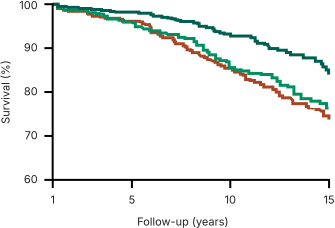
aPatients (N=3059) from the GLOBAL PBC Study Group database were analyzed to determine whether bilirubin or ALP levels within the normal range (≤1.0 x ULN) were associated with survival in patients with PBC. The dataset included both untreated patients and patients treated with UDCA. The primary endpoint was a composite of liver transplant and all-cause mortality.10

Hear why Dr. Gideon Hirschfield advocates for ALP normalization as an important treatment goal in PBC
Hello, I’m Dr. Gideon Hirschfield. For nearly 20 years, I’ve been helping lead pivotal research to advance the understanding and treatment of PBC.
We know that PBC is a chronic autoimmune liver disease that may progress to end-stage liver disease.3,4
That’s why early diagnosis and treatment are essential.3,4
Up to half of patients with early-stage PBC progress to a more severe stage within 5 years.7
And long-term treatment outcomes were improved when treatment was initiated with ursodeoxycholic acid (UDCA) during early stages of disease.1
Because this is a chronic disease, as clinicians, we should focus on both disease control and symptom management to improve the daily lives of our patients with PBC.4
At a fundamental level, ALP is a key marker: it’s found in various tissues in the body, including the liver and bile ducts, and is released when bile flow is impaired.4,12
As a result, most patients with PBC have abnormal liver tests, including elevations of ALP.3
ALP has become a well-recognized surrogate marker of disease outcomes.4,13,14
ALP levels consistently greater than normal are associated with adverse outcomes, such as cholestasis, bile duct destruction, and disease progression.2,4
Left untreated or inadequately controlled, PBC can lead to cirrhosis and the need for liver transplant.15
Because this process may be irreversible, we must be vigilant in keeping an eye on ALP levels and monitoring trends.4
For patients with inadequate response to UDCA, persistent ALP elevation above 1.67 times the upper limit of normal is associated with liver transplant and poorer outcomes.2,10
And even for those whose ALP levels hover between 1 and 1.67 times the upper limit of normal, “stable” may not be good enough.2,10
Studies continue to support that lowering ALP to normal may have the highest chance to delay or prevent the risk of PBC disease progression or liver transplant. And this also applies to those who are on UDCA.2,10
I’m part of the GLOBAL PBC Study Group, which is a collection of global thought leaders. We analyzed more than 3000 patients to determine whether bilirubin or ALP levels within the normal range were associated with survival in patients with PBC.10
The dataset included both untreated patients and patients treated with UDCA. The primary endpoint was a composite of liver transplant and all-cause mortality.10
This chart shows 15-year survival estimates stratified by ALP thresholds in patients with normal bilirubin at 1 year after starting UDCA.10,11
If you follow the dark line, you can see an overall survival rate of 84% in patients with ALP less than or equal to 1.0 times the upper limit of normal.10
Compare this with10:
- 76% in patients with ALP 1.0 to 1.67 times the upper limit of normal.
- And 74% in patients with ALP 1.67 to 3 times the upper limit of normal.
This study demonstrates that ALP normalization can be associated with improved outcomes and longer transplant-free survival.2,10
Younger patients with advanced fibrosis are likely to see a greater benefit from ALP normalization, reinforcing the importance of early and ongoing assessment.16
PBC treatment guidelines recommend assessing biochemical response to first-line UDCA treatment at 1 year.3,4
From my perspective, it’s important to:
- Assess at 6 months4,13,14
- Aim for ALP normalization2,10
- Consider adding second-line therapy, when appropriate4,13,14
- And continue monitoring over time4,13,14
Our goal as clinicians should be to stay vigilant, act early, and aim for ALP normalization.2,4,11,13,14


ALP=alkaline phosphatase; PBC=primary biliary cholangitis; TB=total bilirubin; UDCA=ursodeoxycholic acid; ULN=upper limit of normal.


Tap for Important Safety Information, including warnings for fractures, liver test abnormalities, and biliary obstruction


LIVDELZI is indicated for the treatment of primary biliary cholangitis (PBC), in combination with ursodeoxycholic acid (UDCA) in adults who have had an inadequate response to UDCA, or as monotherapy in patients unable to tolerate UDCA.
This indication is approved under accelerated approval based on a reduction of alkaline phosphatase (ALP). Improvement in survival or prevention of liver decompensation events have not been demonstrated. Continued approval for this indication may be contingent upon verification and description of clinical benefit in confirmatory trial(s).
Limitation of Use: Use of LIVDELZI is not recommended in patients who have or develop decompensated cirrhosis (eg, ascites, variceal bleeding, hepatic encephalopathy).
IMPORTANT SAFETY INFORMATION
Warnings and Precautions
- Fractures: Fractures occurred in 4% of LIVDELZI-treated patients compared to no placebo-treated patients. Consider the risk of fracture in the care of patients treated with LIVDELZI and monitor bone health according to current standards of care.
- Liver Test Abnormalities: LIVDELZI has been associated with dose-related increases in serum transaminase (AST and ALT) levels >3x ULN in patients receiving 50 mg and 200 mg once daily (5x and 20x higher than the recommended dosage of 10 mg once daily). Perform baseline clinical and laboratory testing when starting LIVDELZI and monitor thereafter according to routine patient management. Interrupt treatment if the liver tests (ALT, AST, total bilirubin, and/or ALP) worsen, or if the patient develops signs and symptoms of clinical hepatitis (eg, jaundice, right upper quadrant pain, eosinophilia). Consider permanent discontinuation if liver tests worsen after restarting LIVDELZI.
- Biliary Obstruction: Avoid use of LIVDELZI in patients with complete biliary obstruction. If biliary obstruction is suspected, interrupt LIVDELZI and treat as clinically indicated.
Adverse Reactions
- The most common adverse reactions (≥5%) with LIVDELZI were headache (8%), abdominal pain (7%), nausea (6%), abdominal distension (6%), and dizziness (5%).
Drug Interactions
Potential Increased Exposure of LIVDELZI with:
- Probenecid: Avoid coadministration with LIVDELZI.
- Strong CYP2C9 Inhibitors: Monitor for adverse effects during concomitant use.
- Dual Moderate CYP2C9 and Moderate or Strong CYP3A4 Inhibitors (eg, fluconazole): Monitor for adverse effects during concomitant use.
- CYP2C9 Poor Metabolizers Using Moderate or Strong CYP3A4 Inhibitors: Monitor for adverse effects during concomitant use of a moderate or strong CYP3A4 inhibitor in patients who are CYP2C9 poor metabolizers.
- Dual or Multiple Clinical Inhibitors of Drug Transporters OATP1B1, OATP1B3, and BCRP (eg, cyclosporine): Monitor for adverse effects during concomitant use.
Potential Reduction in LIVDELZI Exposure with:
- Rifampin: Concomitant use of LIVDELZI with rifampin, an inducer of metabolizing enzymes, may result in delayed or suboptimal LIVDELZI biochemical response. Monitor biochemical response (eg, ALP and bilirubin) when patients initiate rifampin during LIVDELZI treatment.
- Bile Acid Sequestrants: Administer LIVDELZI at least 4 hours before or 4 hours after taking a bile acid sequestrant, or at as great an interval as possible.
Pregnancy and Lactation
- Pregnancy: There are insufficient data from human pregnancies exposed to LIVDELZI to allow an assessment of a drug-associated risk of major birth defects, miscarriage, or other adverse maternal or fetal outcomes. Report pregnancies to Gilead Sciences, Inc., at 1-800-445-3235.
- Lactation: There are no data on the presence of LIVDELZI in human milk, the effects on the breastfed infant, or the effects on milk production. The developmental and health benefits of breastfeeding should be considered along with the mother’s clinical need for LIVDELZI and any potential adverse effects on the breastfed infant from LIVDELZI.
Please see full Prescribing Information for LIVDELZI.
References
- Trivella J, John BV, Levy C. Primary biliary cholangitis: epidemiology, prognosis, and treatment. Hepatol Commun. 2023;7(6):e0179. doi:10.1097/HC9.0000000000000179
- Lammers WJ, van Buuren HR, Hirschfield GM, et al. Levels of alkaline phosphatase and bilirubin are surrogate end points of outcomes of patients with primary biliary cirrhosis: an international follow-up study. Gastroenterology. 2014;147(6):1338-1349.e5. doi:10.1053/j.gastro.2014.08.029
- Lindor KD, Bowlus CL, Boyer J, Levy C, Mayo M. Primary biliary cholangitis: 2018 practice guidance from the American Association for the Study of Liver Diseases. Hepatology. 2019;69(1):394-419. doi:10.1002/hep.30145
- European Association for the Study of the Liver. EASL Clinical Practice Guidelines: the diagnosis and management of patients with primary biliary cholangitis. J Hepatol. 2017;67(1):145-172. doi:10.1016/j.jhep.2017.03.022
- Hirschfield GM, Bowlus CL, Mayo MJ, et al; RESPONSE Study Group. A phase 3 trial of seladelpar in primary biliary cholangitis. N Engl J Med. 2024;390(9):783-794. doi:10.1056/NEJMoa2312100
- Jones DE. Pathogenesis of primary biliary cirrhosis. Gut. 2007;56(11):1615-1624. doi:10.1136/gut.2007.122150
- Sasaki M, Nakanuma Y. Biliary epithelial apoptosis, autophagy, and senescence in primary biliary cirrhosis. Hepat Res Treat. 2010;2010:205128. doi:10.1155/2010/205128
- Gao J, Qiao L, Wang B. Primary biliary cirrhosis is a generalized autoimmune epithelitis. Int J Mol Sci. 2015;16(3):6432-6446. doi:10.3390/ijms16036432
- Invernizzi P, Floreani A, Carbone M, et al. Primary biliary cholangitis: advances in management and treatment of the disease. Dig Liver Dis. 2017;49(8):841-846. doi:10.1016/j.dld.2017.05.001
- Murillo Perez CF, Harms MH, Lindor KD, et al; GLOBAL PBC Study Group. Goals of treatment for improved survival in primary biliary cholangitis: treatment target should be bilirubin within the normal range and normalization of alkaline phosphatase. Am J Gastroenterol. 2020;115(7):1066-1074. doi:10.14309/ajg.0000000000000557
- Murillo Perez CF, Harms MH, Lindor KD, et al; GLOBAL PBC Study Group. Goals of treatment for improved survival in primary biliary cholangitis: treatment target should be bilirubin within the normal range and normalization of alkaline phosphatase [supplementary appendix]. Am J Gastroenterol. 2020;115(7):1066-1074. doi:10.14309/ajg.0000000000000557
- Lowe D, Sanvictores T, Zubair M, et al. Alkaline phosphatase. In: StatPearls [Internet]. Treasure Island (FL): StatPearls Publishing; 2025. https://www.ncbi.nlm.nih.gov/books/NBK459201/. Accessed September 10, 2025.
- Kowdley KV, Bowlus CL, Levy C, et al. Application of the latest advances in evidence-based medicine in primary biliary cholangitis. Am J Gastroenterol. 2023;118(2):232-242. doi:10.14309/ajg.0000000000002070
- Hirschfield GM, Chazouillères O, Cortez-Pinto H, et al. A consensus integrated care pathway for patients with primary biliary cholangitis: a guidelines-based approach to clinical care of patients. Expert Rev Gastroenterol Hepatol. 2021;15(8):929-939. doi:10.1080/17474124.2021.1945919
- Gungabissoon U, Smith HT, von Maltzahn R, et al. Pruritus in primary biliary cholangitis is under-recorded in patient medical records. BMJ Open Gastroenterol. 2024;11(1):e001287. doi:10.1136/bmjgast-2023-001287
- Corpechot C, Lemoinne S, Soret PA, et al; Global & ERN Rare-Liver PBC Study Groups. Adequate versus deep response to ursodeoxycholic acid in primary biliary cholangitis: to what extent and under what conditions is normal alkaline phosphatase level associated with complication-free survival gain? Hepatology. 2024;79(1):39-48. doi:10.1097/HEP.0000000000000529.